
What Is Seed Cycling? How This Powerful Tool Can Help Balance Your Hormones Naturally
 Written By: Dr Will Cole
Evidence-Based Reviewed Article
Written By: Dr Will Cole
Evidence-Based Reviewed Article
If you struggle with hormone imbalances, finding answers and solutions can be a difficult journey. In conventional medicine, the typical solution centers around hormonal birth control as a quick fix. However, these approaches often come with their own set of side effects leaving many people confused and frustrated with what to do next.
As a functional medicine practitioner, it is my job to help people find natural, long-term, and sustainable solutions to their health problems. That’s where seed cycling comes in. By strategically incorporating specific seeds into your daily diet during different phases of the menstrual cycle, you can tap into the innate power of nature to support hormone production and restore balance to your body. Whether you are struggling with hormonal imbalances, seeking relief from menstrual irregularities, or simply looking to support your overall hormonal health, read on to learn more about how seed cycling can help you reclaim your health.
What Is Seed Cycling?
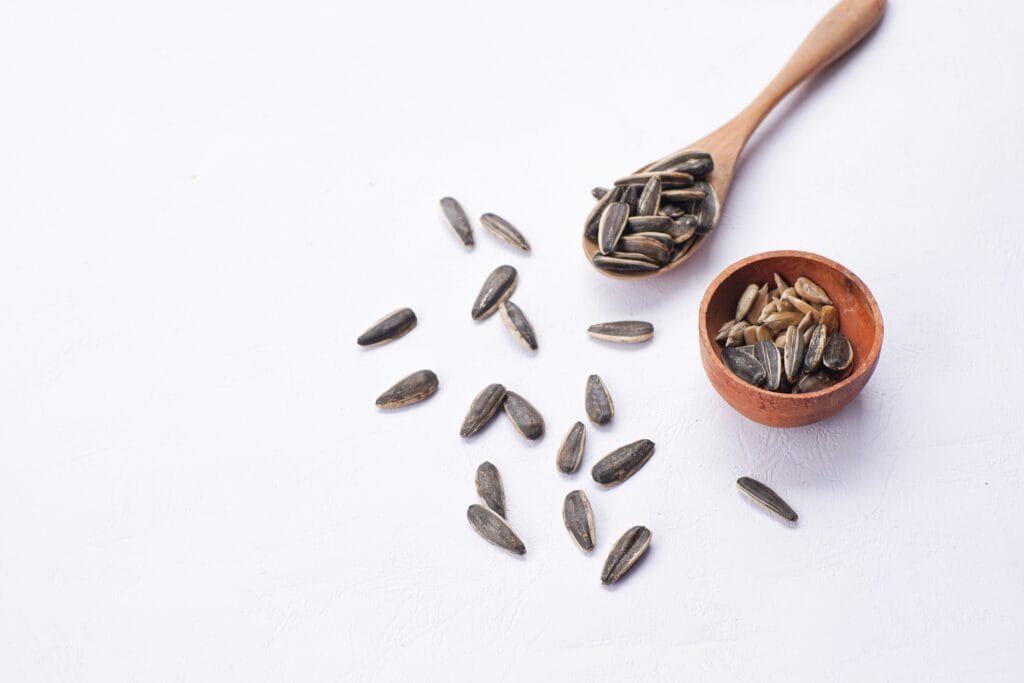
Seed cycling is a natural practice that is used to support overall hormonal balance, specifically when it comes to a women’s menstrual cycle. In seed cycling, specific seeds are consumed during each phase of the menstrual cycle to capitalize on their ability to optimize hormone production and restore imbalances. The seeds commonly used in seed cycling include flaxseeds, pumpkin seeds, sesame seeds, and sunflower seeds due to their unique nutritional value and high concentration of phytoestrogens like lignans.
During the follicular phase, which begins with menstruation and leads up to ovulation, flaxseeds and pumpkin seeds take the spotlight, providing key nutrients to support estrogen production. As you transition into the luteal phase, from ovulation to menstruation, sesame seeds and sunflower seeds step in to aid progesterone production.
How Does Seed Cycling Work With Your Menstrual Cycle?
The menstrual cycle, often following a 28-day cycle, is divided into two main phases: the follicular phase and the luteal phase. The follicular phase begins on the first day of menstruation and lasts until ovulation, while the luteal phase begins after ovulation and continues until the start of the next menstrual period.
Here’s how seed cycling is typically practiced:
- Follicular Phase (Days 1-14): During this phase, 1 tablespoon each of flaxseeds and pumpkin seeds are consumed daily. These seeds are believed to support estrogen production, which is typically low during the follicular phase.
- Luteal Phase (Days 15-28): During this phase, 1 tablespoon each of sesame seeds and sunflower seeds are consumed daily. These seeds are believed to support progesterone production, which is important during the luteal phase.
Understanding the intricate dance of your hormones during your menstrual cycle is key to comprehending the significance of seed cycling.
In the follicular phase which encompasses the days from menstruation to ovulation, estrogen takes center stage. This vital hormone begins to rise, promoting the growth of the uterine lining and stimulating follicle development.
As you transition to the luteal phase of your cycle following ovulation until your next period, progesterone steps into the spotlight. Progesterone prepares the uterus for potential pregnancy and supports overall hormonal balance.
What About Irregular Cycles Or Hormonal Imbalances?
When imbalanced hormones occur due to poor diet, toxins, stress, gut dysfunctions, or other factors, it can result in irregular menstrual cycles, infertility, mood swings, fatigue, skin problems, weight gain, and more. If you are experiencing any of these, it’s a sign that seed cycling is a step in the right direction to get you back on track. It can be difficult to know exactly where to start though with seed cycling and could require some experimentation.
Observing and tracking hormonal symptoms over time – as well as seeking hormonal testing from a medical professional if you haven’t already – can also help you understand any hormonal irregularities better. It may also be worth exploring some basic changes in your daily life to naturally detox your body and balance your hormones.
How Healthy Is Your Thyroid?
Does Seed Cycling Actually Work?
Even though the majority of evidence surrounding seed cycling is mostly anecdotal, it can be explained by the current research regarding these seed’s specific nutritional properties in relation to hormone health.
For example, studies have shown that lignans found in flaxseeds and sesame seeds used in both seed cycling phases are helpful in eliminating excess estrogen to improve estrogen to progesterone ratios.
Seed cycling can act as an important piece of the puzzle in your efforts to support healthy hormone levels. At its core, it is also a great practice to become more in tune with your body.
READ MORE: What Is Estrogen Dominance? Signs & Natural Treatments
Seed Cycling Benefits
The benefits of seed cycling vary from person to person depending on your specific biochemistry but the most common benefits include:
1. Menstrual regularity
Seed cycling can help regulate your menstrual cycle by supporting the natural hormone fluctuations that happen in each phase. This can be particularly helpful if you struggle with irregular periods.
2. Reduced PMS symptoms
The nutritional content of the seeds used in seed cycling, such as essential fatty acids and lignans, may help reduce common symptoms of premenstrual syndrome (PMS). In fact, a 2025 systematic review concluded that seed cycling was able to significantly reduce PMS symptoms such as bloating, breast tenderness, and mood swings. (1)
3. Improved fertility
By supporting hormonal balance and regular menstrual cycles, seed cycling may also have a positive impact on fertility for individuals struggling to conceive.
4. Improved PCOS symptoms
Emerging research published in the journal, Food and Humanity, found that seed cycling had a positive influence on insulin and androgen hormones — two hallmark imbalances found alongside PCOS (polycystic ovary syndrome). That same study also linked the antioxidant content of the seeds to a reduction in oxidative stress which often contributes to symptoms of this condition. (2)
4. Nutritional Support
Seeds used in seed cycling are rich in nutrients, including antioxidants, omega-3 fatty acids, Vitamin E, zinc, magnesium, and lignans. These nutrients have potential benefits for overall health, including supporting healthy skin, hair, and immune function.
Some people who try seed cycling also experience improvement in other symptoms that commonly occur alongside hormone imbalances, such as:
- Reduced acne
- Restored energy
- Improved peri-menopausal, menopause symptoms, and post-menopausal symptoms (night sweats, hot flashes, fatigue)
- Weight loss
- Healthier hair and nails
Shop This Article

The Omega+ has a three times greater EPA+DHA absorption rate compared to other popular fish oil brands out there. That means your body is getting the benefits of omega-3s as efficiently as possible to support your mental, cardiovascular, and metabolic health.

How Long Does It Take For Seed Cycling To Work?
Since every person’s biochemistry is unique, the rate at which you notice changes from seed cycling can vary from person to person. In general, it is recommended to try seed cycling consistently for at least three menstrual cycles — which typically occurs over the course of three months — to allow your body time to respond and adjust.
During this time, make sure to listen to your body and note any changes in your menstrual cycle and symptoms. While some people might notice improvements earlier, it may take a bit longer to see significant changes in your particular health case but that doesn’t mean it isn’t working! Remember, seed cycling is just one piece of your healing toolkit. When it comes to hormone health, it is important to take a comprehensive approach and work with a qualified functional medicine practitioner who can offer personalized guidance based on your individual needs.
Seeds To Use In Seed Cycling + How To Get Started
The reason why seed cycling works is because of the specific seeds that are used and their nutritional value. These make easy additions to salads, pasta, toast, bars, smoothies, meats, etc. And not only do they have beneficial nutrients to support hormones, but they can also add a little extra flavor or zest to a meal!
- Flaxseeds: High in lignans to help balance estrogen levels
- Pumpkin seeds: High in zinc to promote progesterone production and prepare your body for your next cycle
- Sesame seeds: High in selenium to help encourage liver detoxification to rebalance estrogen levels
- Sunflower seeds: High in Vitamin E to help boost progesterone levels
But how do you know when to start seed cycling? The best time to begin seed cycling is on the first day of your cycle, which is the first day of menstruation. I also recommend purchasing high-quality, organic seeds as much as possible.
Should You Try Seed Cycling?
Seed cycling is a relatively safe practice for most people with minimal (if any) side effects. With that being said, if you have a sensitivity to seeds this might not be the best tool for you as seeds can irritate your gut and further perpetuate inflammation and hormone imbalances. You may be able to offset some of this by choosing organic seeds and soaking them before eating to help make them more easily digestible.
Seeking Help From A Functional Medicine Doctor
In general, seed cycling is a great natural tool to support hormone health and address any ongoing symptoms related to hormone imbalances. By incorporating specific seeds into your diet during different phases of the menstrual cycle, you can help support hormone production and restore any imbalances within your body.
However, it’s important to remember that research surrounding seed cycling is continuing to evolve and every individual is unique resulting in hormone imbalances that can stem from various underlying factors. Therefore, I encourage you to take the next step towards better hormonal health by working with a qualified functional medicine practitioner.
In my telehealth functional medicine clinic, we take a holistic approach to your health by looking at comprehensive testing and the entirety of your health case to uncover the root cause of your hormone problems to tailor a personalized plan specific to your health case.
Sometimes, that also requires a more comprehensive dietary changes and targeted supplements, like my Hormone Health Stack for Cycling Women and my Hormone Stack for Menopausal Women that bring together curated nutrients designed to decrease symptoms of PMS, support detoxification, and increase stress resilience for each stage of your cycle along with helping influence estrogen receptor function and estrogen balance during menopause.
As one of the first functional medicine telehealth clinics in the world, we provide webcam health consultations for people around the globe.
Photo: Unsplash.com
Sources
- Nagarajan, D. R., Mani Jacob, D., Munir Mufti, M., Rajesh, S., & Dube, R. (2025). Efficacy of Seed Cycling as an Integrative Therapy for Premenstrual Syndrome and Polycystic Ovary Syndrome in Reproductive
- Aged Women: A Systematic Review. Cureus, 17(8), e90997. https://doi.org/10.7759/cureus.90997
Zafar, M., Rabail, R., Bibi, S., Jebreen, A., Khan, M. A., & Aadil, R. M. (2024). Seed cycling: Approach for polycystic ovarian syndrome. Food and Humanity, 2, 100274. https://doi.org/10.1016/j.foohum.2024.100274
The information on this website has not been evaluated by the Food & Drug Administration or any other medical body. We do not aim to diagnose, treat, cure or prevent any illness or disease. Information is shared for educational purposes only. You must consult your doctor before acting on any content on this website, especially if you are pregnant, nursing, taking medication, or have a medical condition.
Our content may include products that have been independently chosen and recommended by Dr. Will Cole and our editors. If you purchase something mentioned in this article, we may earn a small commission.
Start Your Health Journey Today
FUNCTIONAL MEDICINE CONSULTATIONS FOR PEOPLE AROUND THE WORLD
