

Functional Medicine, Vitamins + Herbs
This Amazonian Herb Has Been Used For Centuries: Benefits of Cat’s Claw
 Written By: Dr Will Cole
Evidence-Based Reviewed Article
Written By: Dr Will Cole
Evidence-Based Reviewed Article
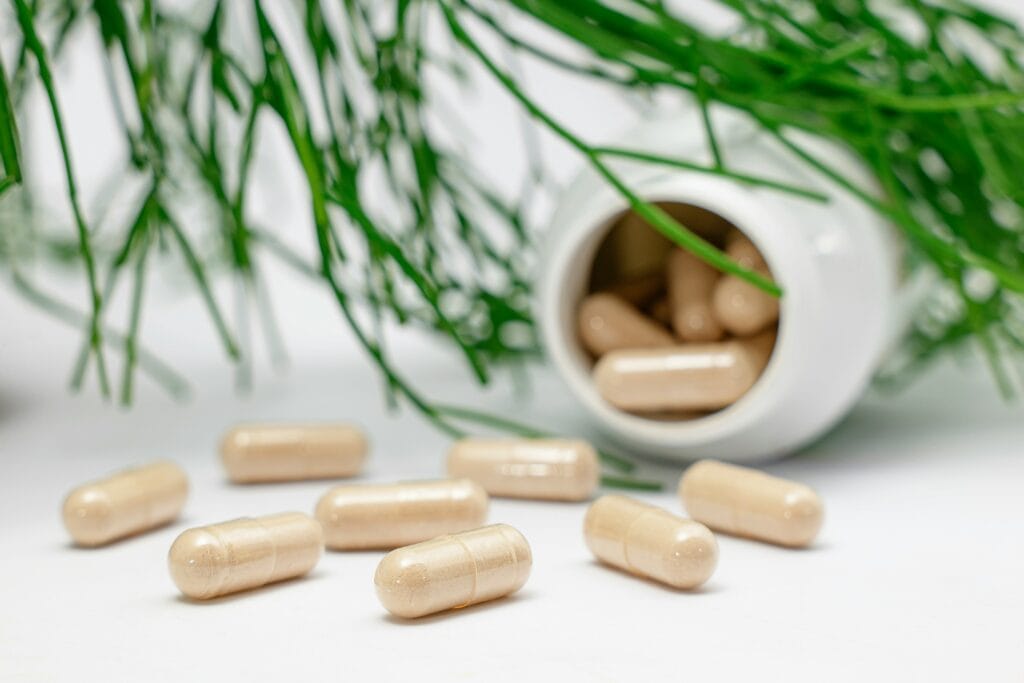
When it comes to supporting your health and wellness, dietary supplements can be a powerful part of your toolbox, offering numerous health benefits. From correcting nutrient deficiencies to helping alleviate symptoms, supplements can do wonders for your overall health. But not all supplements work for everyone — even if they are trending.
Cat’s claw is one supplement that is currently receiving a lot of buzz. Not only has it been shown to be beneficial for boosting the immune system, it can also help alleviate health problems like rheumatoid arthritis due to its anti-inflammatory properties. However, it’s my job as a functional medicine practitioner to educate you on all aspects of a supplement so you can make an informed decision about whether or not it is worth adding into your daily routine.
Here’s a complete breakdown of Cat’s claw benefits, possible side effects, and the best ways for the use of cat’s claw in order to determine if it deserves a permanent place in your supplement lineup.
What is Cat’s claw?
Although Cat’s claw may seem like a newer supplement with how much talk there is around it, this ancient herbal remedy has actually been on the scene for quite a while. Cat’s claw (or uña de gato in Latin America) is a tropical, woody vine that is found in the Amazon rainforest, of Central America and South America, particularly in Peru, that can grow up to 98 feet and gets its name from its distinct, hook-like thorns that look similar to cat’s claws. Its two species — Uncaria tomentosa and Uncaria guianensis — both belonging to the Rubiaceae family, have been used for thousands of years by indigenous tribes of the Peruvian Amazon in their traditional medicine; however, most supplements are derived from the root bark of the Uncaria tomentosa variety. (1)
What is Cat’s claw supplement good for?
Through extensive research and scientific evidence, Cat’s claw has been shown to be beneficial at both boosting the immune system and supporting healthy inflammation levels, thanks to its anti-inflammatory effects.
1. Immune support
One of the biggest reasons people take Cat’s claw is for its immune boosting benefits for both acute and chronic conditions. Cat’s claw contains an abundance of antioxidants and more than 50 phytochemicals including pentacyclic oxindole alkaloids (POAs) which work to support immune function by enhancing white blood cell activity (the defensive shield of your immune system). (2) Cat’s claw has been shown to speed up healing of certain viral infections including dengue virus, (3) herpes, (4) and even COVID-19. (2)
2. Anti-inflammatory
Cat’s claw contains key compounds like polyphenols, triterpenes, oxindole alkaloids, and glycosides that act as potent inhibitors, leading to the inhibition of the pro-inflammatory NF-Kb pathway and reduce TNF-a and other pro-inflammatory cytokines. Studies have found that the anti-inflammatory properties of Cat’s claw are beneficial for easing symptoms of inflammatory conditions such as Rheumatoid arthritis and Osteoarthritis. (1)
The most research surrounding Cat’s claw’s anti-inflammatory benefits, including various clinical trials, has focused mainly on Rheumatoid arthritis and Osteoarthritis. One study found that supplementing with Cat’s claw, compared to a placebo, was able to help reduce symptoms of knee pain in osteoarthritis patients in as little as one week. Another study published in the Journal of Rheumatology tracked 40 patients with rheumatoid arthritis and found that daily supplementation of Cat’s claw resulted in a reduction of painful joints by 29%! (5, 6)
And since both of these conditions are also autoimmune in nature, Cat’s claw can pull double duty by helping regulate an overestimated immune system while at the same time lowering inflammation — a main driver behind autoimmune conditions.
Although more research needs to be done, early studies, including some in vitro, have shown that there are many other conditions that cat’s claw could help with as well:
- Alzheimer’s: While more research needs to be done on humans, early studies on mice have found that Cat’s claw can cross the blood-brain barrier to help get rid of Alzheimer’s disease-causing plaque in the brain. (7)
- Cancer: Initial studies are promising that Cat’s claw can help kill off cancer cells in certain types of cancers like leukemia, breast cancer, and prostate cancer. Another study found that Cat’s claw, even though it wasn’t able to reduce tumor size, was able to reduce fatigue and improve quality of life for those with advanced stage cancer. (8, 9)
- High blood pressure: A variety of Cat’s claw — Uncaria rhynchophyllais — commonly used in Chinese medicine to treat hypertension and reduce blood pressure. This is likely due to the fact that Cat’s claw contains hirsutine, an alkaloid that acts as a calcium channel blocker in the heart and blood vessels. By blocking calcium entry, it helps relax and widen blood vessels, improving blood flow. (10, 11)
- HIV/AIDS: Due to its immune-boosting and anti-inflammatory properties, many people in Southern Africa (where HIV and AIDS is more prevalent) supplement with Cat’s claw. However, research has found Cat’s claw to significantly interact with traditional medications for HIV/AIDS, so it’s not advised to supplement with Cat’s claw if you are also taking conventional HIV/AIDS medication at this time. (12)
Supplement Guide
In my telehealth clinic, I’m often asked about supplements—what to take, why, and which brands are best.

How long does it take for Cat’s claw supplement to work?
As with most supplements, there is no exact timeline for seeing results. Everyone’s health case is unique, and factors such as individual dosages and what other therapies (if any) you are implementing can also play a role in how soon you could expect to see improvement.
But with that said, studies have shown improvements from cat’s claw supplementation in as little as one week and up to eight weeks. The earlier study looking at osteoarthritis patients saw an improvement after just one week of supplementation. Whereas two other studies among different groups of men saw that white blood cell count increased after 6 and 8 weeks of supplementing with Cat’s claw. (13, 14)
It’s important to remember that while some improvements are more noticeable than others (like chronic pain), others like white blood cell count and the subsequent effects that have on your immune system and overall health may take longer to notice.
What are the side effects?
While Cat’s claw extract is generally safe for most people to take, there are a few groups of people that are advised to limit or avoid supplementation altogether due to potential adverse effects: (15)
- If you are pregnant or breastfeeding: Studies around cat’s claw and pregnancy/breastfeeding are limited, so be sure to talk to your doctor to determine if it is ok for your specific case before taking.
- If you are taking certain medications: If you are taking medication for high blood pressure, cholesterol, blood clotting, or cancer, you should also talk with your doctor before supplementing with Cat’s claw. If you are taking SSRI’s you should also avoid Cat’s claw as it may increase serotonin levels. Cat’s claw has been linked to at least one case of serotonin syndrome in the U.S. This can be dangerous, especially for people taking medications like SSRIs that also raise serotonin. (16)
- If you are going to have surgery: Cat’s claw can act as an anticoagulant and slow blood clotting, so talk with your doctor if you are going to have surgery and are currently taking Cat’s claw.
It’s also important to note that Cat’s claw can sometimes result in symptoms of digestive distress like diarrhea, cramping, and nausea when taken in large amounts.
Even with natural supplements, it’s important to take your current health case into consideration when taking a new supplement and always seek professional medical advice. If you are dealing with any underlying conditions or taking any medications it is always good practice to talk with your doctor beforehand to rule out any contraindications.
How should I take Cat’s claw?
Cat’s claw extract can be taken many ways as it is available as a capsule, powder, liquid extract, and tea depending on your personal preference.
Since there is no universal standard dosage for Cat’s claw, dosage can vary widely depending on your particular health case and your goals in taking it. For example, you may take a lower, maintenance dose if you are taking it for immune support and a larger, therapeutic dose if you are looking to help with a chronic condition like Rheumatoid arthritis. Your doctor can help you determine the best supplement method and dosage for your specific case.
But not all Cat’s claw supplements are created the same. Especially when you consider the fact that since herbal supplements are not as tightly regulated as pharmaceuticals, supplements on the market can vary widely in potency, purity, and composition.
That’s why I set out to create my Cat’s Claw supplement to ensure you get the highest quality on the market without any unnecessary additives or other ingredients. Cat’s Claw is specifically formulated to only include beneficial compounds called Pentacyclic Oxindole Alkaloids (POAs) and is verified by independent testing to be free of Tetracyclic Oxindole Alkaloids (TOAs) — compounds that can block the beneficial actions of POA. It is also made using a specialized extraction process to optimize the balance of Cat’s Claw components for as many benefits as possible.
Shop This Article

Dr. Will Cole's Personal Picks to Elevate Your Wellness

Final thoughts
At the end of the day, the goal isn’t to just take another supplement — it’s to curate a routine that offers you the most targeted and well-rounded support. By focusing on supplements like Cat’s claw that support key areas of your body (like your immune system and inflammation levels) your supplement lineup can go a lot further at enhancing your overall wellbeing. This is especially true if you are dealing with inflammatory autoimmune conditions like Rheumatoid arthritis or Osteoarthritis where Cat’s claw has been shown to be a meaningful addition.
Remember, supplementation of any sort should be incorporated into a well-rounded health plan, rather than relying on it as your end-all-be-all solution. Ultimately, the benefits of Cat’s claw can often be enhanced when combined with a variety of lifestyle changes also aimed at lowering inflammation and boosting the immune system such as diet, mindfulness practices to reduce stress, and physical activity. But if you’re still not sure where to start, working with a functional medicine practitioner or another qualified healthcare provider can help you create a clear, comprehensive supplement plan so you can start reclaiming your health.
As one of the first functional medicine telehealth clinics in the world, we provide webcam health consultations for people around the globe.
Photo: Unsplash.com
Sources
- National Institute of Diabetes and Digestive and Kidney Diseases. (2019, February 18). Cat’s claw. In LiverTox: Clinical and research information on drug-induced liver injury. https://www.ncbi.nlm.nih.gov/books/NBK548323/
- Yepes-Perez, A. F., Herrera-Calderón, O., Oliveros, C. A., Flórez-Álvarez, L., Zapata-Cardona, M. I., Yepes, L., Aguilar-Jimenez, W., Rugeles, M. T., & Zapata, W. (2021). The hydroalcoholic extract of Uncaria tomentosa (cat’s claw) inhibits the infection of severe acute respiratory syndrome coronavirus 2 (SARS-CoV-2) in vitro. Evidence-Based Complementary and Alternative Medicine, 2021, Article 6679761. https://doi.org/10.1155/2021/6679761
- Reis, S. R., Valente, L. M., Sampaio, A. L., Siani, A. C., Gandini, M., Azeredo, E. L., D’Avila, L. A., Mazzei, J. L., Henriques, M. D., & Kubelka, C. F. (2008). Immunomodulating and antiviral activities of Uncaria tomentosa on human monocytes infected with dengue virus-2. International Immunopharmacology, 8(3), 468–476. https://doi.org/10.1016/j.intimp.2007.11.010
- Caon, T., Kaiser, S., Feltrin, C., de Carvalho, A., Sincero, T. C., Ortega, G. G., & Simões, C. M. (2014). Antimutagenic and antiherpetic activities of different preparations from Uncaria tomentosa (cat’s claw). Food and Chemical Toxicology, 66, 30–35. https://doi.org/10.1016/j.fct.2014.01.013
- Piscoya, J., Rodriguez, Z., Bustamante, S. A., Okuhama, N. N., Miller, M. J., & Sandoval, M. (2001). Efficacy and safety of freeze-dried cat’s claw in osteoarthritis of the knee: Mechanisms of action of the species Uncaria guianensis. Inflammation Research, 50(9), 442–448. https://doi.org/10.1007/PL00000268
- Mur, E., Hartig, F., Eibl, G., & Schirmer, M. (2002). Randomized double-blind trial of an extract from the pentacyclic alkaloid-chemotype of Uncaria tomentosa for the treatment of rheumatoid arthritis. The Journal of Rheumatology, 29(4), 678–681.
- Snow, A. D., Castillo, G. M., Nguyen, B. P., Choi, P. Y., Cummings, J. A., Cam, J., Hu, Q., Lake, T., Pan, W., Kastin, A. J., Kirschner, D. A., Wood, S. G., Rockenstein, E., Masliah, E., Lorimer, S., Tanzi, R. E., & Larsen, L. (2019). The Amazon rain forest plant Uncaria tomentosa (cat’s claw) and its specific proanthocyanidin constituents are potent inhibitors and reducers of both brain plaques and tangles. Scientific Reports, 9(1), 561. https://doi.org/10.1038/s41598-019-38645-0
- Lopes, A. A., Coppede, J. D. S., Amatto, P. P. G., Aragon, D. C., França, S. C., Carmona, F., & Pereira, A. M. S. (2025). Cytotoxic effect of different Uncaria tomentosa (cat’s claw) extracts and fractions on normal and cancer cells: A systematic review. Frontiers in Pharmacology, 16, 1584840. https://doi.org/10.3389/fphar.2025.1584840
- Paula, L. C. L. de, Fonseca, F., & del Giglio, A., et al. (2015). Uncaria tomentosa (cat’s claw) improves quality of life in patients with advanced solid tumors. Journal of Alternative and Complementary Medicine, 21(1). https://doi.org/10.1089/acm.2014.0127
- Kamyab, R., Namdar, H., Torbati, M., Ghojazadeh, M., Araj-Khodaei, M., & Fazljou, S. M. B. (2021). Medicinal plants in the treatment of hypertension: A review. Advanced Pharmaceutical Bulletin, 11(4), 601–617. https://doi.org/10.34172/apb.2021.090
- Yano, S., Horiuchi, H., Horie, S., Aimi, N., Sakai, S., & Watanabe, K. (1991). Ca²⁺ channel blocking effects of hirsutine, an indole alkaloid from Uncaria genus, in the isolated rat aorta. Planta Medica, 57(5), 403–405. https://doi.org/10.1055/s-2006-960134
- Müller, A. C., & Kanfer, I. (2011). Potential pharmacokinetic interactions between antiretrovirals and medicinal plants used as complementary and African traditional medicines. Biopharmaceutics & Drug Disposition, 32(8), 458–470. https://doi.org/10.1002/bdd.775
- Sheng, Y., Bryngelsson, C., & Pero, R. W. (2000). Enhanced DNA repair, immune function and reduced toxicity of C-MED-100, a novel aqueous extract from Uncaria tomentosa. Journal of Ethnopharmacology, 69(2), 115–126. https://doi.org/10.1016/s0378-8741(99)00070-7
- Lamm, S., Sheng, Y., & Pero, R. W. (2001). Persistent response to pneumococcal vaccine in individuals supplemented with a novel water-soluble extract of Uncaria tomentosa, C-Med-100. Phytomedicine, 8(4), 267–274. https://doi.org/10.1078/0944-7113-00046
- National Center for Complementary and Integrative Health. (2024, November). Cat’s claw: Usefulness and safety. U.S. Department of Health and Human Services. https://www.nccih.nih.gov/health/cats-claw
- Ragsdell, J. E., Tynes, B. E., & Tynes, L. L. (2021). A possible role for Uncaria tomentosa (cat’s claw) in a case of serotonin syndrome. The Primary Care Companion for CNS Disorders, 23(4), 21cr02937. https://doi.org/10.4088/PCC.21cr02937
The information on this website has not been evaluated by the Food & Drug Administration or any other medical body. We do not aim to diagnose, treat, cure or prevent any illness or disease. Information is shared for educational purposes only. You must consult your doctor before acting on any content on this website, especially if you are pregnant, nursing, taking medication, or have a medical condition.
Our content may include products that have been independently chosen and recommended by Dr. Will Cole and our editors. If you purchase something mentioned in this article, we may earn a small commission.
Start Your Health Journey Today
FUNCTIONAL MEDICINE CONSULTATIONS FOR PEOPLE AROUND THE WORLD
