

What Is Vitiligo? A Functional Medicine Guide To Causes, Symptoms + Natural Solutions
 Written By: Dr Will Cole
Evidence-Based Reviewed Article
Written By: Dr Will Cole
Evidence-Based Reviewed Article
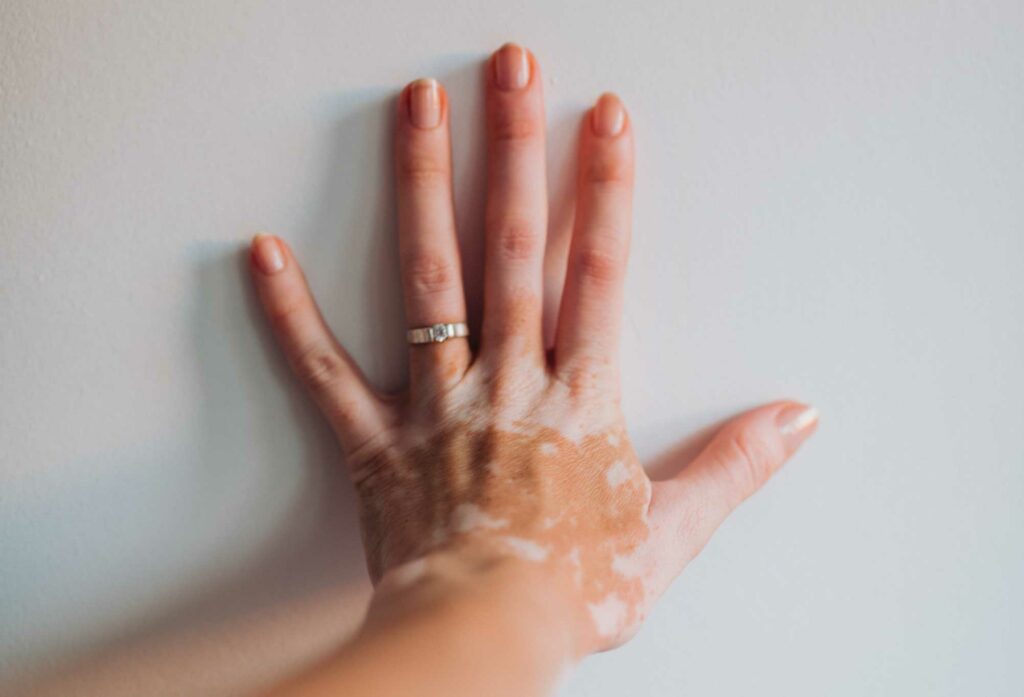

According to the Global Vitiligo Foundation, and echoed by the American Academy of Dermatology, (1) 70 million people — approximately 1% of the world’s population — are affected by this autoimmune skin condition. This makes it a prevalent autoimmune disease and a significant area of focus in dermatology. And out of all the autoimmune conditions, I’ve seen vitiligo be one of the most frustrating for my patients since its symptoms are so visually prevalent compared to other autoimmune conditions (especially on dark skin tones), impacting social interactions and taking a toll on a person’s self-esteem. But there is hope. By understanding what vitiligo is, its symptoms, and different vitiligo causes, you can take steps to reclaim your health.
What is vitiligo?
Considered an autoimmune skin condition, vitiligo causes the loss of skin pigment cells, resulting in depigmented patches of skin, altering its natural skin color, and is one of many skin diseases that can impact appearance. While the exact cause of vitiligo is still unknown, researchers believe that vitiligo causes involve a combination of genetic predisposition, environmental triggers, and autoimmune factors which ultimately cause the destruction of melanocytes — the cells responsible for producing melanin — which give skin its color.
There are two types of vitiligo: non-segmental and segmental.
1. Non-segmental vitiligo
This is the most common type of vitiligo, and is characterized by symmetrical patches that appear on both sides of the body, affecting either a small area or large area of skin. These patches spread over time and can affect multiple body parts including your hands, face, arms, and areas that are exposed to the sun more often.
2. Segmental vitiligo
In contrast, this type of vitiligo typically manifests as unilateral patches, affecting a specific area of the body. Unlike non-segmental vitiligo, this form usually stabilizes after a certain period of progression and may not spread extensively. Segmental vitiligo is less common, often starts at an earlier age, and might show a more rapid progression at first before tapering off.
Vitiligo is not contagious or life-threatening, but it can significantly impact a person’s self-esteem because of how much it can alter your appearance. It’s common for people with vitiligo to experience emotional distress as a result of societal stigma or misconceptions surrounding the condition. In fact, studies have found that those with vitiligo experience a reduced quality of life, often struggling with depression, anxiety, sexual dysfunction, and more. (2)
What are the symptoms of vitiligo?
The main symptoms of vitiligo, which can sometimes be confirmed through a biopsy, include:
- Patches of depigmented skin: The most obvious sign of vitiligo is the development of white spots of skin, a condition known as hypopigmentation, which can be further identified using a Wood’s lamp.
- Early graying or whitening of hair: Hair in the affected areas might turn white or lose its natural color prematurely, especially on your scalp, eyebrows, eyelashes, or beard.
- Change in eye color: In some instances, vitiligo can cause a change in the color of the retinas inside your eyes.
Since everyone’s health is unique, symptoms can vary widely among individuals, and the progression can be unpredictable, making working with a qualified health care practitioner an important piece of your healing journey in order to find the right treatment plan for you.
Gut Health Guide
Your gut is too important to your overall health to be ignored.

What is the root cause of vitiligo?
As with most other autoimmune conditions, the exact cause of vitiligo is unknown, but it is ultimately a result of an autoimmune reaction where your body’s immune system mistakenly attacks and destroys melanocytes — the pigment-producing cells in your skin. This immune-mediated destruction is what leads to the loss of pigmentation and white patches seen in those with vitiligo.
Researchers have also found that certain factors can trigger the onset of vitiligo and perpetuate the condition, including:
- Chronic stress: Stress can seriously affect your immune system, potentially triggering or worsening vitiligo symptoms.
- Sun exposure: Overexposure to UV rays can cause sunburns on depigmented skin areas, leading to an increased contrast between affected and unaffected skin and potentially worsening the condition. Using sunscreen is crucial to protect these sensitive areas.
- Injuries: Physical trauma, cuts, or burns on the skin can sometimes trigger new vitiligo patches or worsen existing ones.
- Chemical exposure: Contact with certain chemicals or substances found in cosmetics or cleaning products can possibly perpetuate vitiligo.
- Hormonal changes: Hormonal changes might impact the onset of vitiligo.
- Genetics: People who have a family history of vitiligo are at an increased risk of developing this condition.
- Autoimmune conditions: People with another autoimmune condition like Addison’s disease, psoriasis, pernicious Rheumatoid arthritis, thyroid disease, Type 1 diabetes, or even alopecia, also have an increased risk (3) of developing this condition.
Vitiligo treatment
There is no single cure for vitiligo, though treatments like grafting are sometimes explored. But with that said, there are some treatments that are commonly used to help slow the spread of depigmentation.
1. Medication
In conventional medicine, vitiligo is often treated with medications like calcineurin inhibitors (such as tacrolimus), corticosteroids, ruxolitinib, and topical janus kinase inhibitors that help to slow pigmentation loss, restore color back to your skin, and help melanocytes grow back.
2. Light therapy
Light therapy, also known as phototherapy, is a common treatment option for vitiligo aimed at repigmenting the skin. It involves exposing the affected skin to UV light to stimulate the melanocytes (pigment-producing cells) and encourage repigmentation in the depigmented areas affected by vitiligo. Phototherapy can be administered using different techniques:
- Narrowband UVB (NB-UVB) Therapy: This is the most commonly used form of phototherapy for vitiligo, utilizing ultraviolet B light. It utilizes a specific wavelength of UVB light, typically between 311 to 312 nanometers, which is believed to be most effective in repigmenting the skin without causing significant damage. (4)
- PUVA Therapy: PUVA stands for Psoralen combined with UVA light. This therapy involves the administration of psoralen, a light-sensitizing medication, followed by exposure to UVA light. Psoralen makes the skin more responsive to UVA light, enhancing its effectiveness in repigmenting the affected areas.
- Excimer Laser Therapy: This form of phototherapy utilizes a targeted beam of UVB light from an excimer laser. It allows for precise targeting of a small area affected by vitiligo, delivering UVB light only to the depigmented patches.
3. Microneedling
Microneedling is a common cosmetic procedure when it comes to anti-aging but is gaining traction as a natural remedy for vitiligo. It involves running a roller that contains multiple fine needles that create tiny punctures or “micro-injuries” over the depigmented areas of the skin. By inducing these small, controlled injuries, it stimulates your body’s natural healing process to promote the growth of melanocytes in the depigmented areas. A recent review (5) of over 14 clinical studies found that microneedling was able to significantly improve depigmentation in those with vitiligo with little to no side effects.
4. Zinc
Although more research needs to be done, researchers have started (6) to look at the relationship between zinc deficiency and the prevalence of vitiligo with studies showing (7) that zinc deficiency is common among those with this condition.
5. Ginkgo biloba
Due to its antioxidant and immunomodulating properties, studies found (8) that regular supplementation was able to help improve skin’s appearance and in some individuals, repigmentation after just 12 weeks.
6. Vitamin B12 and folic acid
Levels of Vitamin B12 and folic acid have been found (9) to be deficient in the majority of people with vitiligo. A study tested this hypothesis over the course of two years and found that regular supplementation with Vitamin B12, folic acid, and sun exposure helped slow the spread of vitiligo in 64% of patients. (10)
Shop This Article

Dr. Will Cole's Personal Picks to Elevate Your Wellness

Seeking help from a functional medicine expert
On the surface, vitiligo can seem like purely a cosmetic problem. However, we can’t forget that vitiligo is an autoimmune condition first and foremost. With roots in inflammation, gut dysfunction, hormone imbalances, and more, vitiligo like any other autoimmune condition is multifaceted and often requires a comprehensive deep dive into a person’s health to uncover the real root causes driving this condition.
In my telehealth functional medicine clinic, we specialize in treating autoimmune-inflammation problems like vitiligo through diet, lifestyle changes, and natural supplements. If you are struggling with vitiligo and are looking for a natural approach to healing, schedule a telehealth consultation today to learn more about how we can help you with functional medicine.
As one of the first functional medicine telehealth clinics in the world, we provide webcam health consultations for people around the globe.
Photo: unsplash.com
Sources
- Global Vitiligo Foundation. (n.d.). Vitiligo facts. https://globalvitiligofoundation.org/vitiligo-facts/
Ezzedine, K., Eleftheriadou, V., Jones, H., Bibeau, K., Kuo, F. I., Sturm, D., & Pandya, A. G. (2021). - Psychosocial effects of vitiligo: A systematic literature review. American Journal of Clinical Dermatology, 22(6), 757–774. https://doi.org/10.1007/s40257-021-00631-6
- National Institute of Arthritis and Musculoskeletal and Skin Diseases. (2022, October). Vitiligo. National Institutes of Health. https://www.niams.nih.gov/health-topics/vitiligo
- Bishnoi, A., & Parsad, D. (2024). Phototherapy for vitiligo: A narrative review on the clinical and molecular aspects, and recent literature. Photodermatology, Photoimmunology & Photomedicine, 40, e12968. https://doi.org/10.1111/phpp.12968
- Salloum, A., Bazzi, N., Maalouf, D., & Habre, M. (2020). Microneedling in vitiligo: A systematic review. Dermatologic Therapy, 33(6), e14297. https://doi.org/10.1111/dth.14297
- Bagherani, N., Yaghoobi, R., & Omidian, M. (2011). Hypothesis: Zinc can be effective in treatment of vitiligo. Indian Journal of Dermatology, 56(5), 480–484. https://doi.org/10.4103/0019-5154.87116
- Sanad, E. M., El-Fallah, A. A., Al-Doori, A. R., & Salem, R. M. (2020). Serum zinc and inflammatory cytokines in vitiligo. The Journal of Clinical and Aesthetic Dermatology, 13(12 Suppl 1), S29–S33.
- Szczurko, O., Shear, N., Taddio, A., & Boon, H. (2011). Ginkgo biloba for the treatment of vitiligo vulgaris: An open-label pilot clinical trial. BMC Complementary and Alternative Medicine, 11, 21. https://doi.org/10.1186/1472-6882-11-21
- Montes, L. F., Diaz, M. L., Lajous, J., & Garcia, N. J. (1992). Folic acid and vitamin B12 in vitiligo: A nutritional approach. Cutis, 50(1), 39–42.
- Juhlin, L., & Olsson, M. J. (1997). Improvement of vitiligo after oral treatment with vitamin B12 and folic acid and the importance of sun exposure. Acta Dermato-Venereologica, 77(6), 460–462. https://doi.org/10.2340/000155555577460462
The information on this website has not been evaluated by the Food & Drug Administration or any other medical body. We do not aim to diagnose, treat, cure or prevent any illness or disease. Information is shared for educational purposes only. You must consult your doctor before acting on any content on this website, especially if you are pregnant, nursing, taking medication, or have a medical condition.
Our content may include products that have been independently chosen and recommended by Dr. Will Cole and our editors. If you purchase something mentioned in this article, we may earn a small commission.
Start Your Health Journey Today
FUNCTIONAL MEDICINE CONSULTATIONS FOR PEOPLE AROUND THE WORLD
