

Creatine For Women: Exactly What You Need To Know About This Trending Supplement + Women’s Health
 Written By: Dr Will Cole
Evidence-Based Reviewed Article
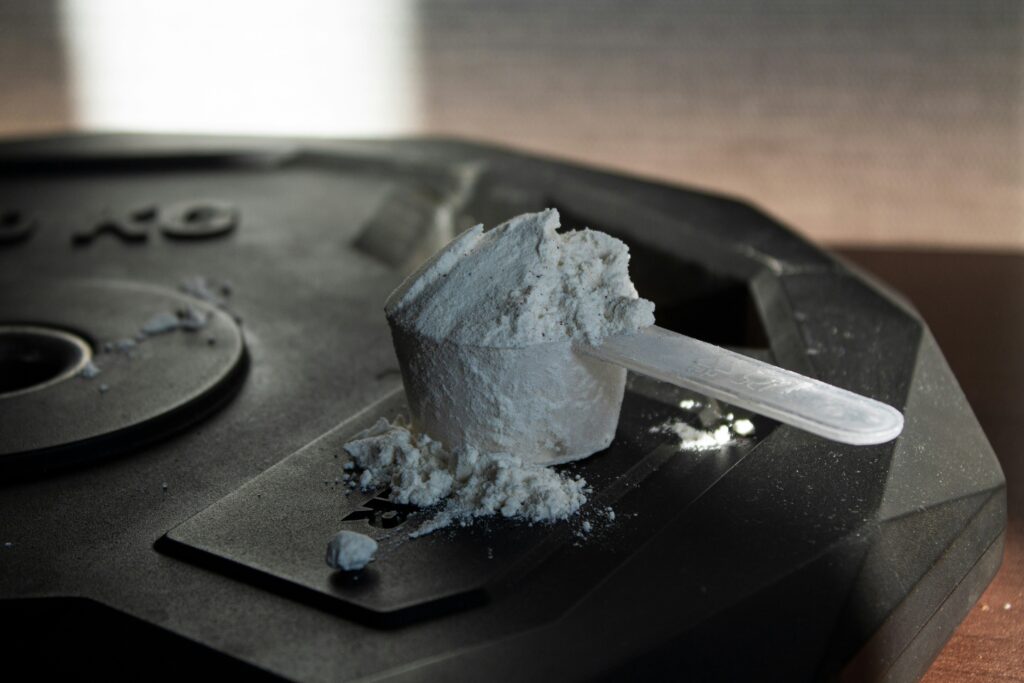
As a functional medicine practitioner, I have seen the rise and fall of many trending supplements, and creatine is the latest supplement currently getting all the buzz. What was once only popular with bodybuilders and weightlifters looking to gain muscle, has now become the must-use daily supplement amongst regular gym goers and everyday athletes.
I also hear a lot of pushback around this supplement, particularly from women. With rumors circulating about weight gain, many are starting to wonder whether creatine is the best choice. However, the science behind creatine-related weight gain and its researched-backed benefits for women’s health may surprise you.
So, is creatine worth adding to your wellness routine? Read on to discover the science behind creatine for women, its potential benefits, recommended dosage, and if it really does make you gain weight, so we can separate fact from hype and determine if the popular supplement is right for you.
What is creatine?
Creatine is a naturally occurring nitrogenous organic acid produced by the body from three amino acids — glycine, arginine, and methionine — and is primarily stored in your skeletal muscle and other tissues like your brain. It is considered a type of peptide that plays a vital role in your body’s energy production process by producing adenosine triphosphate (ATP), your body’s primary energy currency.
Your body naturally produces creatine, but not at a rate fast enough to meet your needs. Therefore, you need to get the rest of your requirements through animal-based protein like grass-fed beef, wild-caught fish, and grass-fed dairy. But even still, diet alone may not be enough to get the amount of creatine your body actually needs, especially if you’re highly active. This is where supplementation comes in.
Health benefits of creatine for women
Creatine has many well-known health benefits including enhanced physical and exercise performance, but when it comes to women’s health there are specific areas where this supplement shines.
1. Supports hormone changes
During a normal 28-day cycle hormone levels naturally fluctuate to facilitate all stages of the menstrual cycle. However, changes in hormones like estrogen and progesterone can directly impact creatine levels. In fact, research shows that women have 70-80% less creatine stores in their bodies compared to men. (1)
Studies have found that supplementing with creatine on a daily basis was able to restore balance to areas of health affecting by hormonal changes with one study showing that creatine was able to help improve athletic performance and recovery time during specific phases of the menstrual cycle. (2)
2. Improves bone health
Osteoporosis is a condition characterized by a lack of bone density and happens when your body can’t keep up with creating new bone in comparison to how fast it is being lost. While anyone can be affected, women are at the highest risk for developing osteoporosis as they get older, particularly during perimenopause and menopause.
Research has found that creatine can reduce the effect of bone loss in postmenopausal women when combined with general exercise, strength training, and resistance training due to its ability to increase muscle mass. (3)
3. Promotes cellular health
The vast majority of health problems can be traced back to the cellular level. Known as the “building blocks of life” your cells make up every single part of your body and are responsible for converting nutrients into energy and keeping your body functioning properly. In order to have healthy cells, you need to have healthy mitochondria, the “powerhouses” of each one of your cells.
Your mitochondria rely on ATP for energy production which is necessary for optimal function. Since creatine is necessary for ATP production, supplementing with creatine has been linked to increased mitochondrial function. (4) Since poor cellular health has been connected to everything from hormone imbalances and weight gain to accelerated aging and fatigue, supporting this area of your health can be vital for maintaining pivotal areas of women’s health.
4. Boosts cognitive function and better mood
While the research is still evolving around creatine for women’s brain health and overall neurological function, the studies that have been done are extremely promising. One study in particular found that daily supplementation with creatine was able to improve both cognition and overall mood in women. (1) Another study showed that creatine was able to enhance the effects of antidepressants to alleviate symptoms. (5) This supported other research showing that creatine led to a reduction in symptoms of depression as a result of a traumatic brain injury. (6) This is likely to due creatine’s role in enhancing neurotransmitter synthesis and energy metabolism
5. Encourages muscle growth
Despite the rumors of weight gain with creatine, the research says otherwise. After just five weeks of daily creatine supplementation, studies found that women were able to see a significant improvement in both muscle strength and weight loss. (1) Plus, due to its role in energy production, creatine can help support lean muscle growth. (7)
Will creatine make me bulky?
A lot of the discourse around creatine for women has to do with how it affects weight and muscle mass. Here’s the truth: creatine will not automatically make you bulky. It’s actually quite the opposite. As we’ve learned, creatine can actually help develop lean, toned muscles without the bulk. Simply taking creatine and lifting weights isn’t necessarily going to bulk you up, that requires a more comprehensive dietary strategy combined with targeted weightlifting workouts.
But what about the women who have gained weight after starting creatine? This actually has less to do with body fat and more to do with water retention. This can be a side effect from creatine supplementation due to water being stored within the muscle cells. While this can even out over time, it doesn’t happen to everyone and can be mitigated by monitoring and adjusting your dosage as needed.
What is the ideal creatine dosage for women?
Similarly to a lot of things in women’s health, most of the research around creatine supplements is focused on men. But with that said, women are likely to benefit from similar dosages (although I still advocate for more research dedicated to women).
Most people suggest starting off with a “loading dose” of creatine before tapering off to a smaller maintenance dose as a way to help increase the stored creatine levels in your body quicker. To do this, start by taking approximately 20 grams of creatine once a day for five to seven days before dropping down to a consistent daily dose of 3-5 grams. If you are concerned about weight gain, avoiding the loading phase may also help mitigate the possibility of water retention.
Start Your Health Journey Today

Functional Medicine consultations for people around the world
How to choose the right creatine supplement for you
The biggest thing to consider when choosing a creatine supplement is the type of creatine. Creatine Monohydrate is the most common and well-researched form of creatine since it is highly soluble and the most bioavailable to your body. (8)
That doesn’t mean though that other forms of creatine are bad. Some forms have very specific use cases and can be more beneficial than others depending on your individual goals and health case:
- Creatine Ethyl Ester: This is also another highly soluble form of creatine, but there is little research to show that it is more bioavailable than creatine monohydrate.
- Creatine Hydrochloride: This form is believed to be easier on digestion and better for people who are experiencing digestive distress from creatine monohydrate, but more research needs to be done on this specific form in comparison to monohydrate.
- Buffered Creatine: Also known as Kre-Alkalyn, buffered creatine is said to have a higher pH level, potentially making it more stable in liquids and less likely to convert into creatinine (a waste product) before being absorbed.
- Creatine Blends: You can also find supplements that contain creatine alongside other beneficial ingredients like amino acids, vitamins, or carbohydrates designed to enhance athletic performance.
You can find creatine as capsules, pills, or tablets, but it is most commonly made in powdered form. This is my personal favorite since it is super versatile and can be mixed with water or added to smoothies or another beverage. It can also be taken with or without food and at any time of the day, not just around a workout.
SHOP: Now that you’ve narrowed down the type of creatine to take, the next step is finding a trustworthy brand. Not all supplements are created equal and it can be difficult to know what brands deliver on quality. That’s why I formulated, The Creatine. Whether you’re training for strength, staying active as you age, or looking for a science-backed way to promote the natural energy production processes in your body, Creatine delivers. This unflavored powder features Creapure®, a highly purified, scientifically studied form of creatine monohydrate known for its consistency, safety, and performance benefits. Creapure is sourced from Germany and undergoes internal and external quality control standards to ensure it meets the highest quality standards for creatine monohydrate.
Things to consider
Creatine is generally safe for most people, except for those with kidney problems or diagnosed with bipolar disorder as it has been known to cause mania. Otherwise, the biggest thing to consider as a woman before taking creatine is whether or not you are pregnant or breastfeeding since studies are very limited in this area regarding the potential long-term effects.
A few other side effects can include dehydration, diarrhea, upset stomach, muscle cramping, bloating, and excessive water retention. If you do experience any of these, start by cutting back on your dosage. If your symptoms persist or become worse, talk with your doctor right away.
LISTEN: Creatine Myths & Truths, Protein Goals, Leucine & Longevity | JJ Virgin
Bringing it all together
Although I wish there was more dedicated research around creatine supplements on women’s health, what the current studies do have to say is very promising. Not only can creatine help with hormone balance and bone health — two key areas of women’s health — it is essential for ATP production and healthy cells (your body’s building blocks).
So if you are interested in taking creatine as a woman, it isn’t something to shy away from, even if you’ve heard the rumors around weight gain. With any new supplement, choose reputable brands, take it slow, and up your dosage within the daily recommendations as you see fit. Everyone’s health is different and what works for one person may still not work for you, but in general, creatine could make a worthy addition to your routine.
If you need more guidance, my telehealth functional medicine clinic specializes in comprehensive diagnostics and health history to determine the best supplements to reach your health goals.
As one of the first functional medicine telehealth clinics in the world, we provide webcam health consultations for people around the globe.
Photo: Unsplash.com
Why did I gain 10 pounds after taking creatine?
Most people don’t actually gain body fat after taking creatine. Instead, you may be experiencing excess water retention that can even out the longer you take this supplement. If you are experiencing water retention, try adjusting your dosage.
What is the best form of creatine to take?
Creatine monohydrate is the most well-researched form of creatine. You can find creatine in capsules, tablets, liquid, or powders that make a great addition mixed with water, smoothies, or your other favorite beverages.
Sources
- Smith-Ryan, A. E., Cabre, H. E., Eckerson, J. M., & Candow, D. G. (2021). Creatine Supplementation in Women’s Health: A Lifespan Perspective. Nutrients, 13(3), 877. https://doi.org/10.3390/nu13030877
- Hall, L., Klassen, S., Holbein, J., & Waters, J. (2025). Impact of creatine supplementation on menopausal women’s body composition, cognition, estrogen, strength, and sleep. Journal of the International Society of Sports Nutrition, 22(Suppl 1), 2533673. https://doi.org/10.1080/15502783.2025.2533673
- Naddafha, S., Antonio, J., Kreider, R. B., & Stout, J. R. (2026). Creatine monohydrate for lean mass, strength, and bone density in postmenopausal women: a systematic review and meta-analysis. Journal of the International Society of Sports Nutrition, 23(1), 2668435. https://doi.org/10.1080/15502783.2026.2668435
- Saito, S., Cao, D. Y., Okuno, A., Li, X., Peng, Z., Kelel, M., & Tsuji, N. M. (2022). Creatine supplementation enhances immunological function of neutrophils by increasing cellular adenosine triphosphate. Bioscience of microbiota, food and health, 41(4), 185–194. https://doi.org/10.12938/bmfh.2022-018
- Juneja, K., Bhuchakra, H. P., Sadhukhan, S., et al. (2024). Creatine supplementation in depression: A review of mechanisms, efficacy, clinical outcomes, and future directions. Cureus, 16(10), e71638. https://doi.org/10.7759/cureus.71638
- Forbes, S. C., Cordingley, D. M., Cornish, S. M., Gualano, B., Roschel, H., Ostojic, S. M., Rawson, E. S., Roy, B. D., Prokopidis, K., Giannos, P., & Candow, D. G. (2022). Effects of Creatine Supplementation on Brain Function and Health. Nutrients, 14(5), 921. https://doi.org/10.3390/nu14050921
- Clarkson, P. M., & Rawson, E. S. (1999). Nutritional supplements to increase muscle mass. Critical reviews in food science and nutrition, 39(4), 317–328. https://doi.org/10.1080/10408699991279196
- Wax, B., Kerksick, C. M., Jagim, A. R., Mayo, J. J., Lyons, B. C., & Kreider, R. B. (2021). Creatine for Exercise and Sports Performance, with Recovery Considerations for Healthy Populations. Nutrients, 13(6), 1915. https://doi.org/10.3390/nu13061915
The information on this website has not been evaluated by the Food & Drug Administration or any other medical body. We do not aim to diagnose, treat, cure or prevent any illness or disease. Information is shared for educational purposes only. You must consult your doctor before acting on any content on this website, especially if you are pregnant, nursing, taking medication, or have a medical condition.
Our content may include products that have been independently chosen and recommended by Dr. Will Cole and our editors. If you purchase something mentioned in this article, we may earn a small commission.
Start Your Health Journey Today
FUNCTIONAL MEDICINE CONSULTATIONS FOR PEOPLE AROUND THE WORLD
