

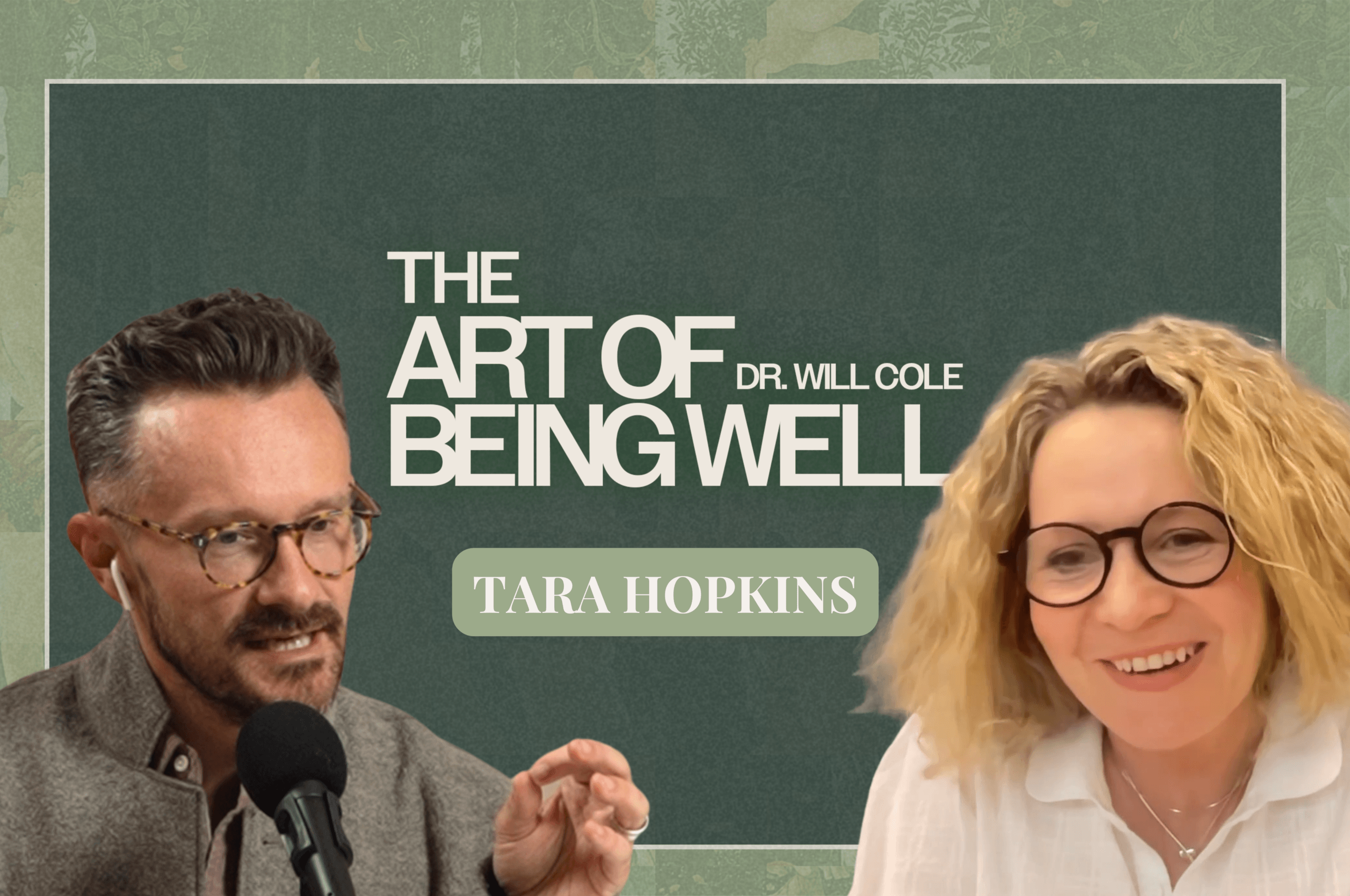
AI & Our Brains + Should Social Media Be Banned for Kids? Instagram Executive’s Uncensored Hot Takes | Tara Hopkins
Click An Icon Below To Subscribe



WATCH THE FULL-LENGTH EPISODE HERE ON YOUTUBE!
I wanted to have this conversation because, like most parents of teenagers, I'm trying to figure this out in real time. There's no pediatrician you can call and ask, "How much Instagram is too much?" So I sat down with Tara Hopkins, who leads policy work for Instagram at Meta, and who is also a mom of two teenagers navigating the exact same questions I am.
What stood out most was how specific and practical the conversation got. Instagram's Teen Accounts feature defaults to restrictive settings — teens can't be contacted by strangers, content is limited to roughly a "13+ movie" standard, and there's a built-in time limit with a notification after an hour. Sleep Mode mutes notifications automatically from 10pm to 7am. And 97% of teens in these accounts have stayed within the default restrictive settings, which Tara takes as a genuinely good sign — whether because teens appreciate the protection or simply haven't needed to change it.
We also got into something I think most parents don't know about: Meta uses AI to detect teens who may have lied about their age when they signed up, looking at signals like who they're connected to, their profile photo, even birthday messages from friends. And there's a push happening industry-wide for age verification to happen at the app store level — a "double lock" system that would take some of the burden off individual apps and parents trying to verify age on 30 or 40 different apps their kid might be using.
The part of the conversation I keep thinking about is Tara's take on outright bans. Australia recently banned social media for under-16s, and France has explored similar measures. Her concern isn't dismissive of the worry behind these policies — it's that bans are blunt instruments that don't account for how differently teens use these platforms, and that forbidden fruit becomes more interesting, not less. She also made the point that for some teens — especially those in rural areas or from marginalized communities — social media is where they find people who understand them. A ban removes that along with the risk.
What I appreciated most, though, was the parenting wisdom that had nothing to do with corporate policy. Her daughter self-regulates easily; her son needs more active limits. She's gotten stricter with her kids as they've gotten older, not more lenient — and she's open about saying she got some things wrong earlier on. That kind of honesty is rare, and worth hearing from someone in her position.
This episode was recorded prior to Meta's agreement with a bipartisan group of 52 attorneys general across US states, territories, and the District of Columbia, building on their longstanding efforts to empower parents and support teens. Learn more at https://about.fb.com/news/2026/08/agreement-with-state-attorneys-general-supporting-teens/
A few of my favorite things we cover in this episode:
- Ask Me Anything: three listener questions this episode
- From Irish human rights policy work in Brussels to Meta: Tara's path through child protection charity work before landing at Instagram
- The three things parents consistently worry about: contact (can strangers reach my teen?), content (what are they seeing and why?), and time (how much is too much?)
- Instagram Teen Accounts explained: default-restrictive settings, no contact from strangers, content limited to a "13+ movie" standard, and a 1-hour daily time limit with notifications
- Sleep Mode: notifications automatically muted from 10pm–7am for teen accounts
- 97% of teens in Teen Accounts have stayed in the most restrictive settings — and 94% of US parents surveyed said the feature gave them more peace of mind
- How Meta uses AI to detect teens who lied about their age when signing up — analyzing signals like friend networks, profile photos, and even birthday messages
- The proposed app-store level age verification system — a "double lock" that could standardize age-checking across all apps, not just Instagram
- Supervision tools: parents can see who their teen is messaging (not the messages themselves) and get alerted if their teen searches for content related to suicide or self-harm
- Why outright social media bans (like Australia's under-16 ban) may backfire — the "forbidden fruit" effect and the loss of community access for vulnerable teens (e.g., LGBTQ teens in rural areas)
- Treating each child differently: Tara's daughter self-regulates, her son needs more active limits — and why parents should feel empowered to set different rules per child
- "It's okay to say you got it wrong" — Tara on tightening boundaries as kids get older rather than assuming early leniency is permanent
- Leading by example: catching yourself on your own phone habits in front of your kids
- The algorithm reset tool: how to clear and retrain your Instagram feed, especially relevant after recovering from a difficult period (eating disorder content, mental health searches, etc.)
- Why Tara recommends a gradual, parent-guided introduction to social media over a hard cutoff at 16 or 18
Products Mentioned:
- Meta Family Center — (parenting resources, guides, conversation starters)
- Instagram Parental Supervision Tools (in-app: Settings → Supervision)
- Algorithm Reset Tool (in-app: Settings → reset recommendations, or use "Not Interested" on individual posts)
- ConnectSafely (US-based digital safety nonprofit Meta partners with)
- National PTA (US partnership organization for parent resources)
Happy listening, and we hope you learned a little bit more on the art of being well!
If you like what you hear, please rate and review the podcast, hit subscribe and pass it along to a friend.
In Health,
Dr. Will Cole
Make Your Life a Cleanse
SUBSCRIBER-ONLY GUIDES FOR GUT HEALTH, VIBRANT ENERGY, HEALTHY FOOD & CLEAN ALCOHOL
Get FREE access to these + giveaways, recipes, & discount codes in personal emails from Dr. Will Cole.
EXCLUSIVE SUBSCRIBER ACCESS
Join My Wellness Community for Heart-Centered Health Wisdom
Get exclusive subscriber content, personal insights, recipes, wellness tips, and behind-the-scenes wisdom for gut health, vibrant energy, healthy food & clean alcohol

Start Your Health Journey Today
FUNCTIONAL MEDICINE CONSULTATIONS FOR PEOPLE AROUND THE WORLD
View More At Our Store
Purchase personally curated supplements
and Dr. Will Cole’s books!
The information on this website has not been evaluated by the Food & Drug Administration or any other medical body. We do not aim to diagnose, treat, cure or prevent any illness or disease. Information is shared for educational purposes only. You must consult your doctor before acting on any content on this website, especially if you are pregnant, nursing, taking medication, or have a medical condition.
Our content may include products that have been independently chosen and recommended by Dr. Will Cole and our editors. If you purchase something mentioned in this article, we may earn a small commission.

BY DR. WILL COLE
Dr. Will Cole, DNM, IFMCP, DC is a leading functional medicine expert who consults people around the globe, starting one of the first functional medicine telehealth centers in the world. Named one of the top 50 functional and integrative doctors in the nation, Dr. Will Cole provides a functional medicine approach for thyroid issues, autoimmune conditions, hormonal imbalances, digestive disorders, and brain problems. He is also the host of the popular The Art of Being Well podcast and the New York Times bestselling author of Intuitive Fasting, Ketotarian, Gut Feelings, and The Inflammation Spectrum.


